It is definitely easier to finish a draft — and more efficient — when you know where you’re headed. If you know your ending, it gives your story more momentum, focuses your scenes, and lets you know when you’re wandering too far afield.
I can already hear some fanatical ‘pantsers’ out there, protesting that such planning precludes miraculous discoveries and robs their characters of their agency. Well, it may be different for other writers, but I find that writing towards something doesn’t preclude any miraculous discoveries, and I can go wildly astray, even with an outline. I don’t think ‘pantsing’ and planning are mutually exclusive.
I’m not against starting to write something before you know the ending; I’ve done it. But once I found a satisfying ending, I usually had to go back and rewrite everything else, so the payoff was properly set up. I find it’s inefficient, and sometimes downright demoralizing, to have to go back to fix story points or re-align characters I thought were already done.
I’m not against tangents, runaway sub-plots, or subsidiary characters either — in the right context. A film or TV script would probably be the wrong context, unless you’re using it to extend the suspense of some other storyline or maybe provide comic counterpoint. And if you have to insert a dream sequence or flashback, I’d prefer you keep it real short — but that’s just me.
I do know this: Readers/audiences will forgive a small misstep in the middle, if you stick your landing.
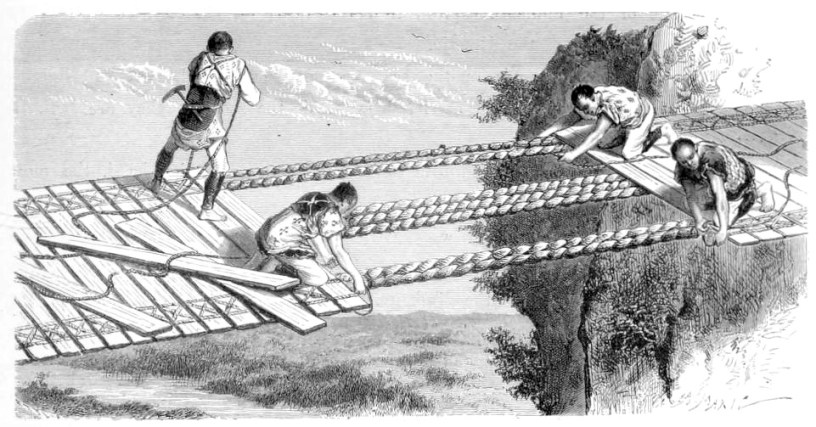
The featured image shows workers building a log bridge over a gorge. The center of the bridge is not yet filled in, but they are working towards it from both sides. The image is from “Japan and the Japanese Illustrated”, by Aime Humbert, pub. 1874
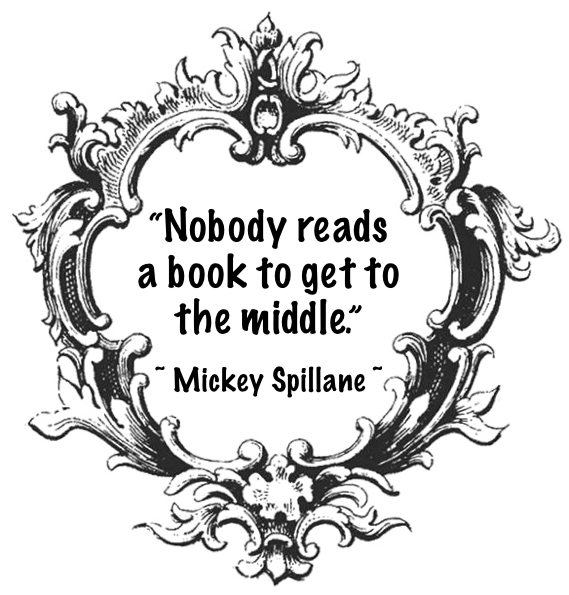
The image on this page is an elaborate #PublicDomain scrolled frame enclosing the following quote, from detective fiction writer Mickey Spillane: “Nobody reads a book to get to the middle.”
#WritingAdvice #CreativeAdvice
 GREG MILLER - Writer & Writing Coach