Apparently, many Americans have been taught that Benedict Arnold was caught and hung for his crimes. In fact, our most infamous turncoat was never caught or punished in any way for betraying the rebellion. He was 60 years old when he died at his home in England, in bed, attended by his beloved wife, who was also – although no one else knew it at the time – his co-conspirator.
I’ve been researching a historical set during the Revolution and in the process I have discovered a great many myths about Arnold, often repeated as facts. One of my favorite fantasies about Arnold is the persistent myth that, on his deathbed, Arnold asked to be dressed in his old Continental Army uniform and ‘regretted that he had ever donned another’. This is patently preposterous since that would mean a) that he kept his uniform during the year following his shift of allegiance, during which he was actively attacking, invading, and planning against America, then the following 20 years, during which he was living in England, then several locations in Canada, then England again, and constantly sailing around the world on trading voyages, and b) that the uniform he wore when he was 40 would have still fit him when he was 60.
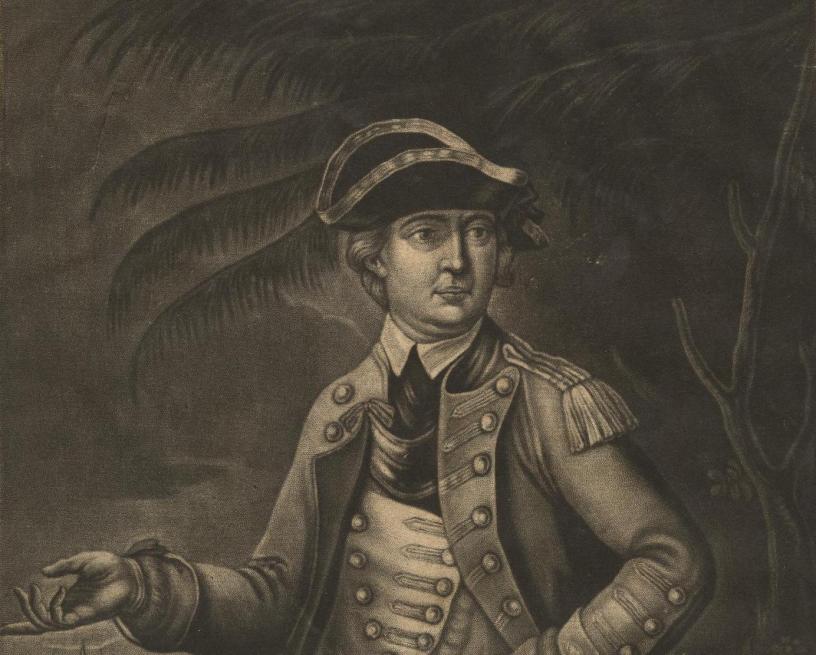
The portrait below, which purports to depict Arnold when he was a Colonel and his fame was on the rise, probably looks nothing like him. I haven’t been able to find the ‘Act’ (of Parliament) that directed any portrait to be made. It was drawn by Thomas Hart, or an artist in his employ, in London, who had never seen Arnold in person – just more of the mythology that obscures the truth of America’s most infamous turncoat.
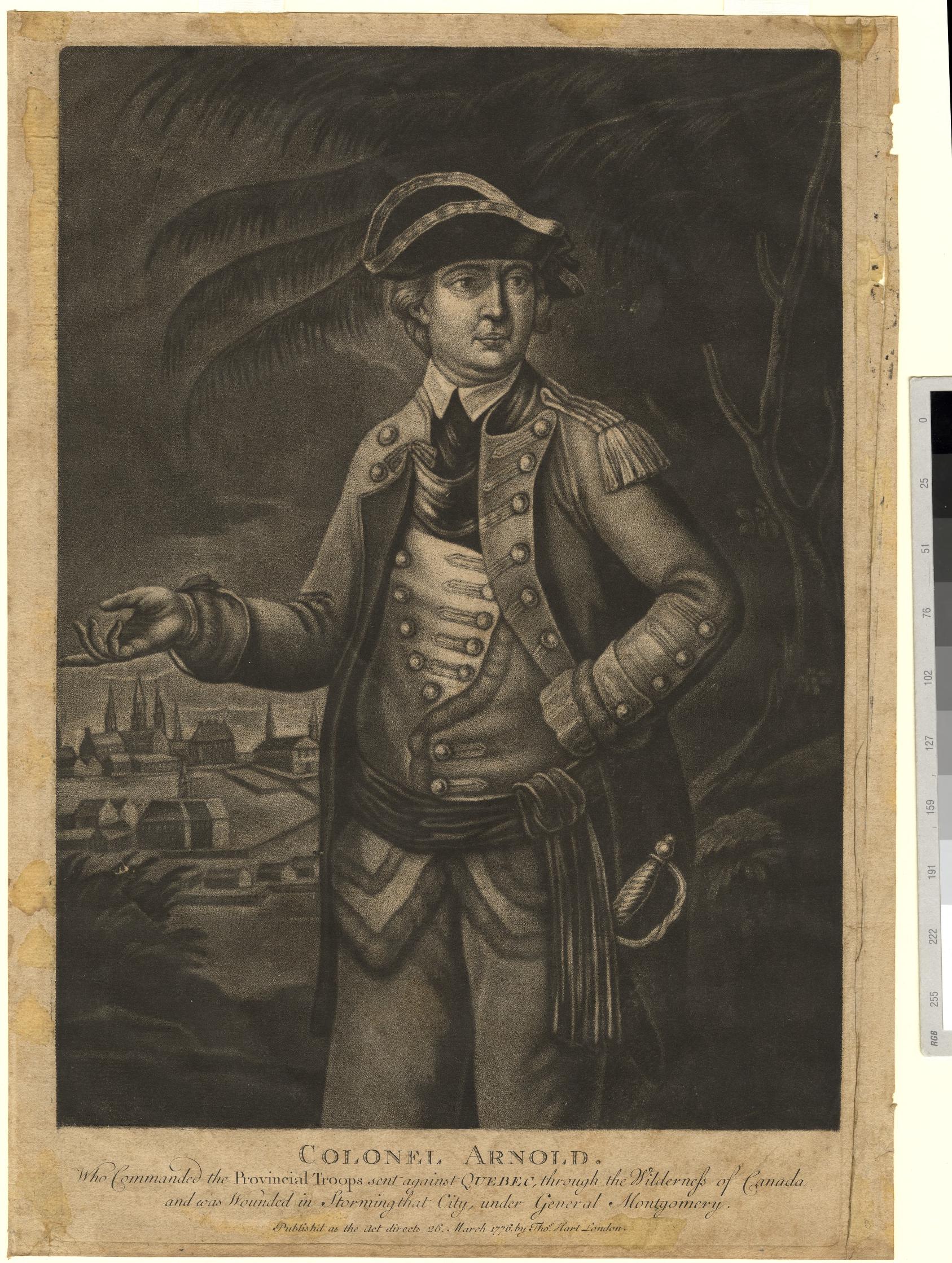
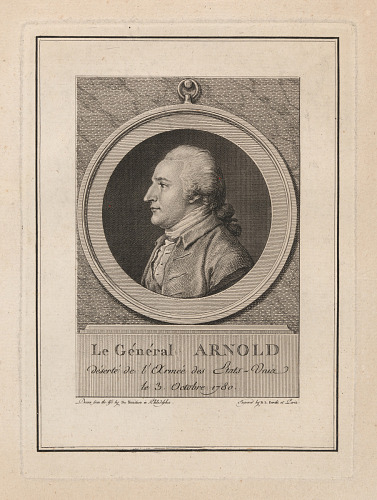
The engraved profile on the left is probably a more accurate likeness of Arnold. It is actually a copy of a portrait done by a French artist called du Simitiere, from life, when Major General Arnold was serving as Military Commander of Philadelphia. By October 3, 1780 (when this copy was presumably executed), most Americans wanted to execute Arnold. His defection had only just been discovered, and on that date there was a tremendous demonstration against him on the streets of Philadelphia (and cities all across America as the news spread). By then, Arnold had fled to British lines in New York City, where he took up arms for the King.
According to the brilliant independent scholar Stephen Darley, the original du Simitiere portrait is most likely the most accurate. Ever the thorough researcher, Darley wrote a whole article about the relative accuracy of various Arnold portraits.
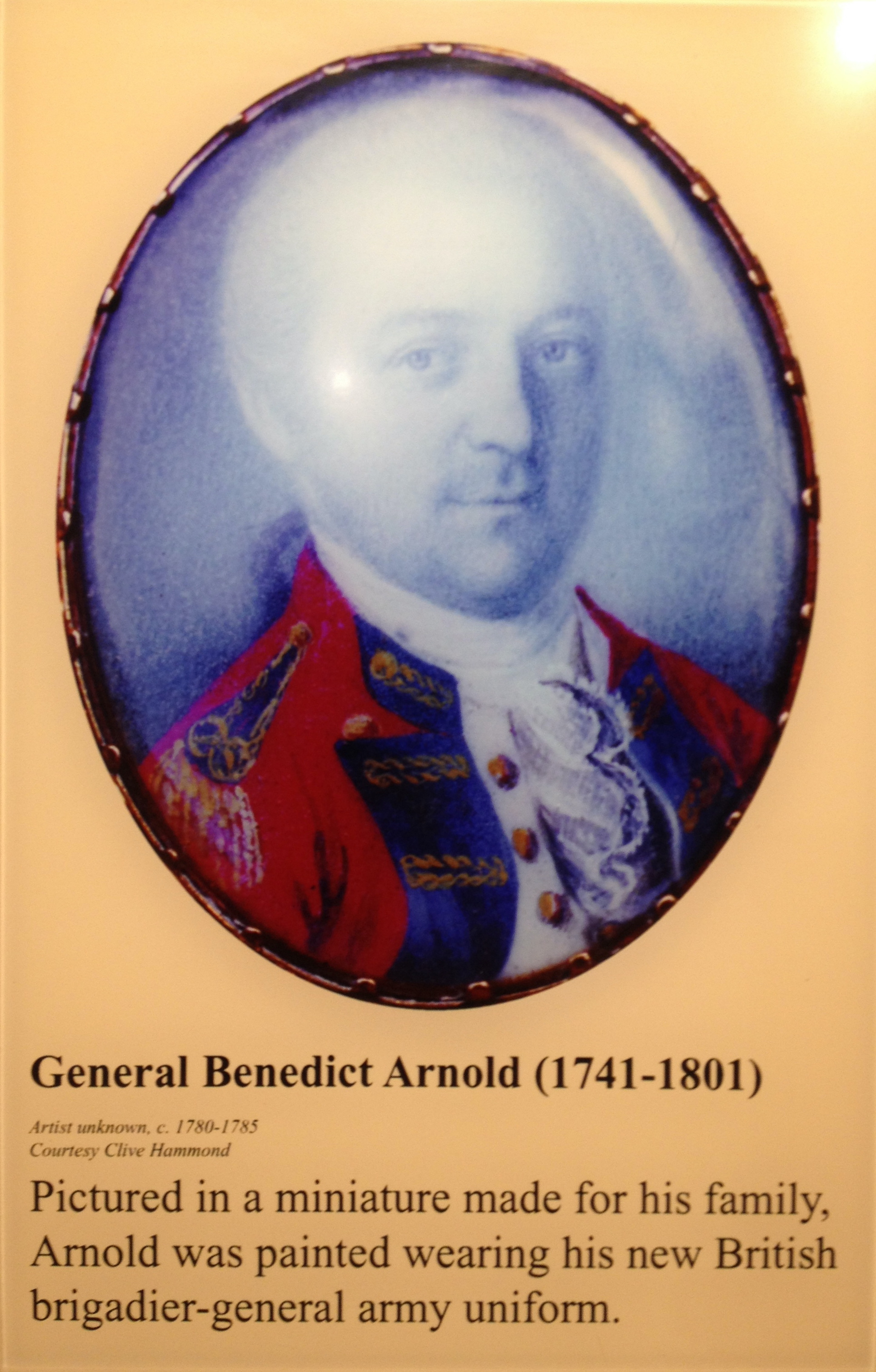
I personally find this miniature portrait most compelling. The artist (unknown) has given Arnold’s eyes a lively, knowing air, which supports everything I’ve read about his personality–everything that wasn’t written by his detractors!
And that barely scratches the surface of erroneous and omitted details about General Benedict Arnold.
 GREG MILLER - Writer & Writing Coach